Massachusetts Institute of Technology © 2011 Visualizing Cultures
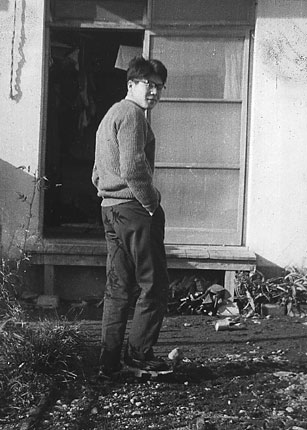
This photo was taken when Uncle Hiroshi was 22 years old, around the time he started working
in the family shoe store. Uncle Hiroshi attended Waseda University in Tokyo, one of the best, and was a brilliant philosophy student. I wonder
how he felt about taking over the shoe store from his father?
Uncle Hiroshi probably made the geta he is wearing in the photo. I shot a good video today of him making geta. People always used to wear geta (wooden shoes, slightly elevated). Now people wear regular shoes (never in the house, of course!) and keep geta around for occasional use..
Site 14: Shoe Store
Uncle Hiroshi and the Shoe Store
site 14 photo 1.1
Hiroshi in the muddy back yard, wearing geta.
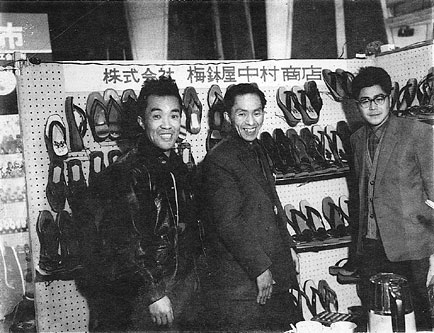
site 14 photo 1.2
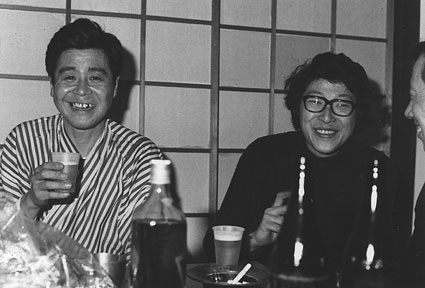
Hiroshi Yamada (right) my uncle, in the shoe store with his friends, 1950’s.
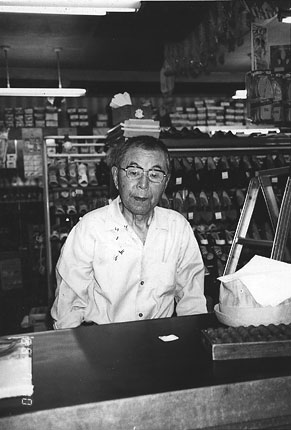
site 14 photo 1.3
Grandfather in his shoe store with modern shoes
Shoes are never worn inside the home in Japan. One time a thief entered our house and stole some money. The money had been in the center of the room, but there were no muddy footprints or any sign he had been there because he had removed his shoes,
as is proper.
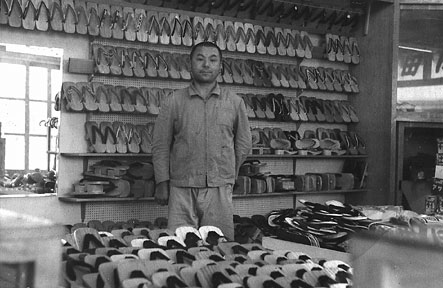
site 14 photo 2.1
Tatsu Go-Ro Yamada (my grandfather) in his shoe store as a young man, surrounded by geta.
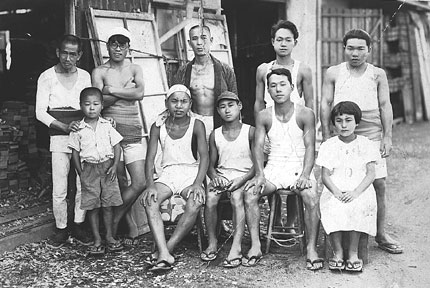
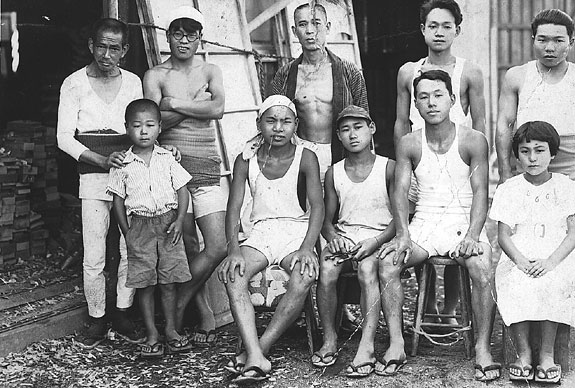
Hiroshi, Mitsuko and their Uncle Toru are photographed with shoe factory workers. Everyone worked. Their father (Tatsu Go-Ro) was on the battlefield in China at the time. My mother, Mitsuko, helped with packing at the factory.
site 14 photo 2.2
The Yamada family shoe factory, 1930’s.
site 14 photo 2.2 close up
On the far left you can see the blocks of wood used to make geta. Small boy standing on the left is Hiroshi (my uncle). Young man seated 2nd from right, Toru (my mother’s uncle). Girl seated far right, Mitsuko (my mom).
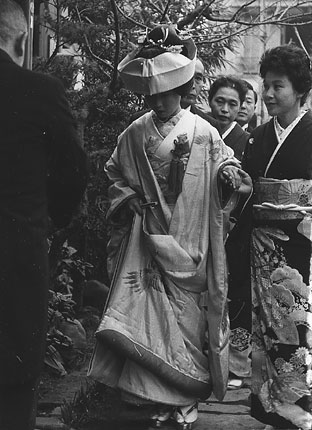
Wedding kimonos are always very colorful. Ritsuko wears a formal coat on top. The hat is called “hiding the horns.”
“At a wedding,” my mother told me, “there are professional kimono helpers (kitsukeshi) who dress the bride and the guests before the ceremony. Usually, the kimonos guests wear to weddings are black. Kimonos worn to a funeral are all black, but kimonos worn to a wedding are
black with colorful designs on the lower part.”
site 14 photo 3.1
Hiroshi’s bride, Ritsuko, wore the beautiful wedding kimono.
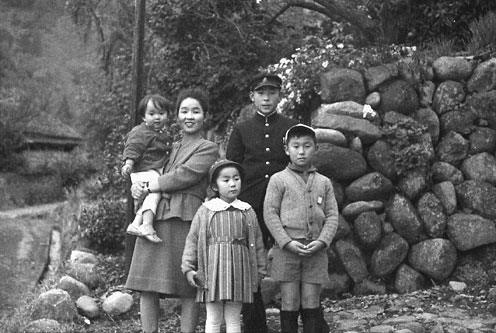
Ritsuko and Hiroshi had three kids: Midori and two sons. In the picture they are visiting her parent’s home, a large tangerine farm in the mountains. It was very pretty there. Their
marriage was probably arranged, like my parents.
site 14 photo 3.2
Ritsuko at her family home, the tangerine farm, left to right: Midori (Ritsuko’s eldest daughter); Ritsuko; my sister, Haruyo; Uncle Toru (in high school uniform) and me
site 14 photo 4.1
Uncle Hiroshi (left) and a friend.
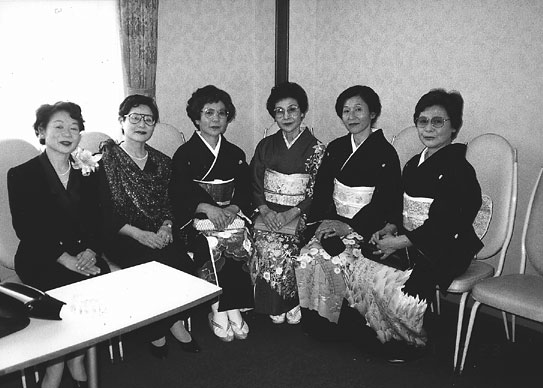
“In this picture I am wearing a purple kimono because I had just had it made,” my mother relates. “Kimonos like this are expensive ($2,000 to $3.000), and a handwoven sash (obi) made of heavy silk costs $3,000 to $4,000. It costs $500 to rent a formal kimono. I could have rented a black kimono for the wedding, but I did not wish to rent one when I had just bought a new one. So I wore purple.”
site 14 photo 4.2
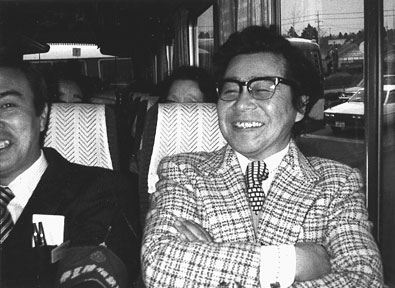
Uncle Hiroshi on a trip
site 14 photo 4.3
Hiroshi’s Sisters at the wedding of his daughter, Midori (left to right) Taeko, Natsue, Aiko, Mitsuko, Reiko, and Yukiko