Massachusetts Institute of Technology © 2011 Visualizing Cultures
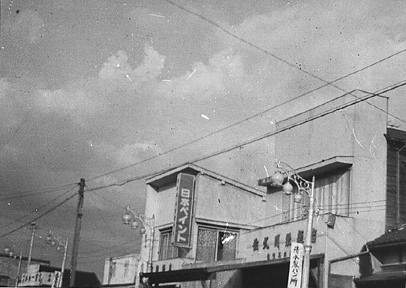
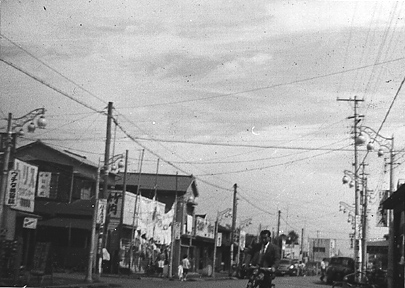
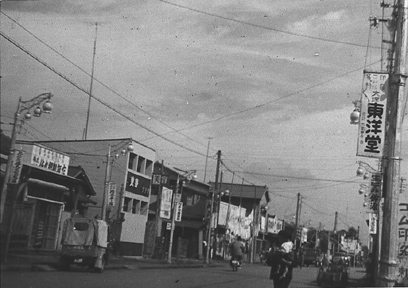
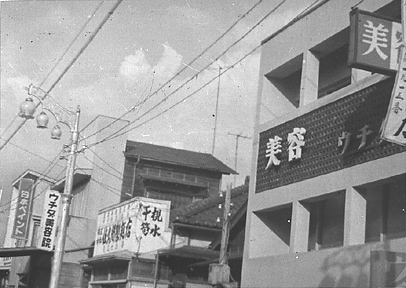
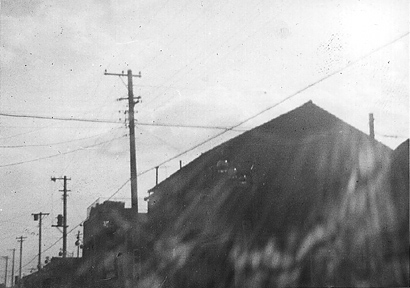
My neighborhood, Akashicho, is a business district but I notice in the pictures I took there are no people or cars – I must have taken them on a Sunday. (look at the pictures on the
next few pages)
I had a lot of friends in the neighborhood. We would play in the Shrine grounds nearby. We loved catching insects (Cicadas especially). They flew way over our heads and we used a
net on a long pole. We also went fishing a lot and played baseball in the side streets.
Site 12: Bus Wharf/Station
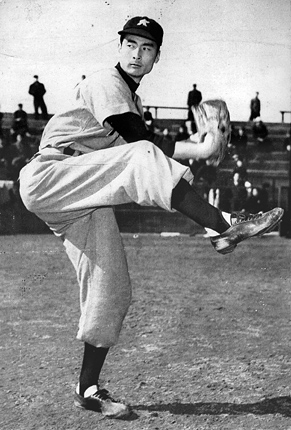
My baseball hero...
and taking my own photos!
I knew all the shop owners. I hung out in the model shop because I loved building things like model cars and airplanes. The owner was a good friend – he helped out. People lived where they worked. There was no
separation between city and suburbs like today.
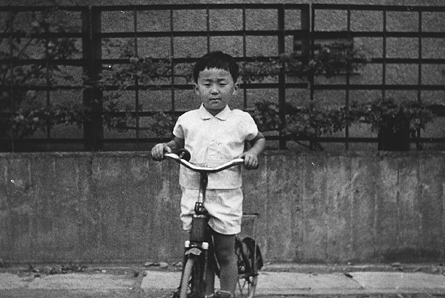
site 12 photo 1.1
Somewhere in Hiratsuka; about 5 years old. As a kid, I bicycled the same route the bus takes today to my grandfather’s shoe store.
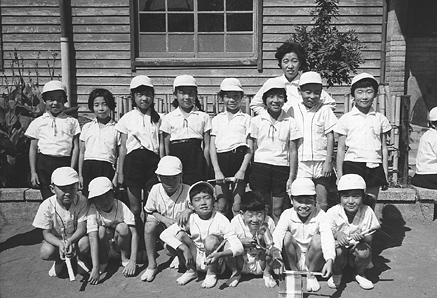
site 12 photo 1.2
Far left front, Shigeru. I am holding a baton for the relay race. Sports Day, 3rd or 4th grade.
Now, I am kind of a golf addict, but it costs $200-$400 to play in Japan. I wish I had learned one of the martial arts like judo, kendo or karate.
I played baseball at school and in neighborhood games. I had the idea of naming our team the “Angels” – don’t know where I got that name. I ordered my uniform with “Angels” written on it, but no one else on the team liked the idea, so I was the
only one.
site 12 photo 1.3
My hero, pitcher Masaichi Kaneda. Baseball has always been very popular in Japan. Babe Ruth played there.
I looked up Masaichi Kaneda on the internet and found some info. By the way, he was Korean!
Only Cy Young and Walter Johnson have surpassed Kaneda’s 400 victories. Akin to Johnson’s experience, he won most of his with one of the weakest teams in Japan, the Kokutetsu Swallows, who finished in the first division only once in his fifteen years with them, 1950-1964.
In 1958 the Swallows were last in homers and near last in batting. But Kaneda was 31-14 with a 1.30 ERA. The Swallows were 27-54 without him.
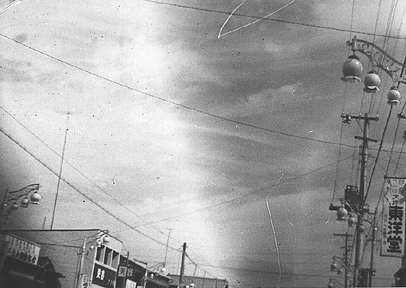
site 12 photo 3.2
Nice view of clouds, ornate street lamps.
In all, he won 43 percent of the Swallows’ victories. He won and lost more 1-0 games than anyone – 21 victories, 23 defeats.
The left-handed Kaneda was the first man to break Walter Johnson’s lifetime strikeout record, as well as the first to break his scoreless innings streak. Nolan Ryan broke Kaneda’s strikeout mark, 4,490, but no one has touched his mark of 64 1/3 straight shutout innings.
Yoichi Nagata and John B. Holway
site 12 photo 2.1
Akashicho from front of our soba shop; shops are no longer there...at lower corner far left is
predecessor to print shop.
site 12 photo 2.2
Looking down street in the early ‘60s, with kimono shop (peaked roof, center) and model shop
(just to right of man on bike).
site 12 photo 2.3
I really enjoyed photography... took all these pictures with my Olympus! This is Akashicho, a wider shot.
site 12 photo 3.1
Across from soba shop, looking toward fruit shop. Hair salon on right.
site 12 photo 3.3
Miyagawa home, 1960’s